


Landlords across the UK—from London flat owners to letting agents in Brighton—tend to scrutinise floor coverings closely during check-out inspections.
A spotless carpet not only lifts the look of the entire room but also strengthens your chances of getting every pound of your deposit back.
Surface vacuuming helps, but it rarely deals with the hidden build-up that accumulates over months or years. You need something more thorough. Here’s how to do a deep clean that will leave your landlord smiling. We cover this in more depth in Magento 2 Abandoned Cart Settings.
Understand Why Deep Cleaning Matters
Carpets naturally harbour dust, grit and occasional spills, particularly in high-traffic spots like the hallway or lounge.
Over time, fibres flatten out, stains settle in, and unpleasant smells become stubborn companions.
In older rentals, you’ll frequently find terraced houses with draughty door gaps, or city flats with years of tenancy. Such places are charming, but the build-up can be even more intense.
If the incoming tenants walk into a home with carpets that feel tired or unkempt, your landlord may charge you for a professional clean or, in the worst cases, a replacement.
A proper deep clean removes embedded dirt and refreshes the space, presenting the property exactly as most landlords expect at the end of a tenancy.
Clear and Prepare the Space Properly
Begin by clearing as much furniture as possible. Even lightweight items can leave marks when dragged across carpets. Use felt pads or sliders when shifting heavier pieces, like wardrobes, bookshelves, or a chest of drawers.
Many renters also overlook small items, like lamps, shoe racks, or play mats, that tend to collect dust underneath. You don’t want to be one of these folks, so clear everything before sprucing up the place.
Once the room is empty, take your time with a slow, methodical vacuum. Pay extra attention to the skirting boards, edges of fitted carpets, and the narrow areas behind radiators where fluff tends to settle.
To make things easier, attach the right vacuum cleaner tools. Using the crevice tool will help loosen debris that standard brushing often misses.
It’s advisable to deal with any obvious stains before tackling the whole carpet. Tea rings, biscuit crumbs worked into the pile, or the odd splash of curry sauce can cling stubbornly if ignored.
You can apply a fabric-safe stain remover or a simple mix of warm water and mild detergent. Dab gently—never scrub—and give the solution a few minutes to work.
Choose the Most Suitable Cleaning Method
Selecting the right cleaning method isn’t just about convenience—it’s about matching the technique to your carpet’s age, fabric, and level of wear.
Older rentals, for example, often have carpets that react differently to moisture or heat, while newer builds may have synthetic fibres designed to withstand more intensive treatments.
Take a moment to assess any fragile spots, lingering smells, or flattened areas before deciding how to proceed. This quick evaluation helps you avoid accidental damage and ensures the method you choose delivers the best possible finish.
Use Steam Cleaning for a Deep Refresh
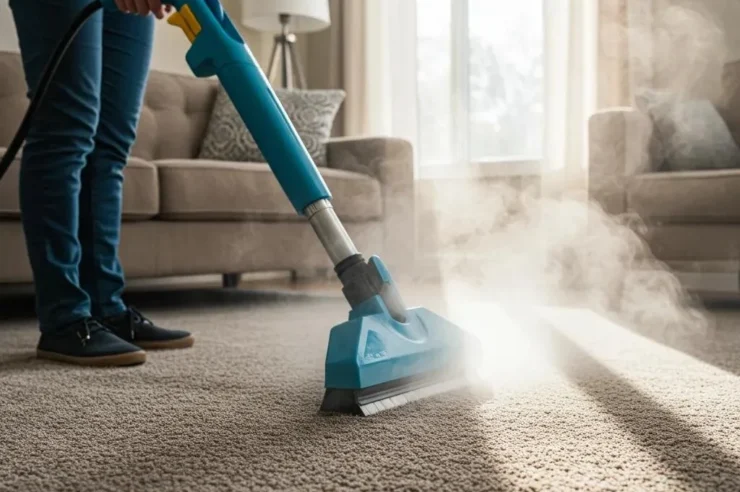
Steam cleaning, or hot water extraction, remains one of the most effective options for heavily used carpets. The hot water penetrates deep into the pile and loosens embedded dirt before an industrial-strength vacuum extracts it.
Many DIY shops, like B&Q, Homebase, or even larger Tesco branches, offer rental machines if you want to take this route yourself.
However, if you’d rather avoid wrestling with a bulky device or navigating awkward staircases, bringing in expert tenancy cleaners can save time and guarantee a better finish.
Opt for Dry Cleaning for Delicate Carpets
For carpets sensitive to moisture, dry cleaning works well. A specialised powder absorbs dirt from the fibres, which you then vacuum thoroughly. Be careful, though, because any leftover residue can create a chalky feel and wear the fibres down faster, so don’t rush this step.
Dry cleaning offers shorter drying times and is ideal if you’re working to a tight move-out schedule. It’s especially helpful during the winter months when carpets naturally take longer to dry. However, it’s not the best choice for deeply embedded grime.
Try Carpet Shampooing for Heavy Soiling
Sometimes, you have to deal with areas that have seen serious use. Examples of this include children’s rooms, shared living spaces, or rentals where multiple tenants have lived over the years. In such cases, carpet shampooing is often the most effective solution.
Work a foaming shampoo into the pile, allow it to sit, then rinse well to avoid a sticky residue. If the product remains trapped in the fibres, it can attract fresh dirt surprisingly quickly, undoing your efforts.
Shampooing is best done when you have time to allow for a thorough rinse and full drying. You’ll find plenty of green products in the market, so try to pick from these sustainable options.
Allow the Carpet to Dry Completely
Whatever method you choose, proper drying is essential. Damp carpets can develop mould, warp the fibres, or carry a persistent musty smell that landlords will flag instantly.
Open windows to create cross-ventilation, switch on a fan, or use a dehumidifier. This is especially useful in older UK buildings where air circulation isn’t ideal.
If you live in a compact flat, propping doors open can help the air move more freely throughout the space. Avoid stepping on the carpet until it is completely dry to prevent marks and re-soiling.
Give the Carpet a Final Check
Once fully dry, run a vacuum over the area one last time. This lifts the carpet pile, removes loose particles and gives the surface a fresh, uniform finish.
Check for stains that may have reappeared, as some spills have a habit of resurfacing once moisture evaporates. Also, assess any lingering odours, particularly in rooms with limited ventilation, like basements or box rooms.
If you’re unsure about the result or feel the carpet still looks a little flat, calling in a reliable cleaning team can spare you unnecessary worry. Expert tenancy cleaners will ensure that the carpets meet move-out standards and help shield your deposit from last-minute deductions.
Conclusion
A spotless carpet can make the difference between a smooth handover and a stressful dispute.
Fortunately, a small investment now could save you a much bigger charge when your landlord tallies up the final inspection.
With the right approach—and enough time to do it properly—you can hand back a home that feels clean, cared for, and move-in ready. And if the job feels overwhelming, don’t hesitate to bring in professional support.